


Cal-Mag for Plants: When You Need It and When You Don't
The three situations where cal-mag is the right call, and why most calcium and magnesium problems are not a shortage at all.
Cal-mag is a supplement that adds calcium and magnesium, and usually some nitrogen, to a nutrient solution. You need it only when your base nutrients and your water together do not supply enough of those two elements. With a complete program you do not need it at all. HGV provides sufficient calcium and magnesium for every growth phase, whether you use RO, well or municipal water.
What is cal-mag?
Cal-mag products are liquid or dry supplements built around calcium and magnesium. Most get their calcium from calcium nitrate, so they also add nitrogen, and many include iron. They were created to patch a gap: nutrient lines designed around tap water that already contained calcium and magnesium, later used by growers who switched to reverse osmosis water or coco coir.
What do calcium and magnesium do?
| Calcium | Magnesium | |
|---|---|---|
| Role | Cell walls, root tips, new growth | The center of the chlorophyll molecule, enzyme activation |
| Mobility in the plant | Immobile | Mobile |
| Where a deficiency shows | New growth and growing tips | Older, lower leaves first |
| Typical symptom | Distorted young leaves, brown spots, weak stems | Yellowing between the veins while veins stay green |
When do growers actually need cal-mag?
- The base nutrient is incomplete. Some lines assume your water supplies calcium and magnesium. With RO or very soft water, that assumption leaves a gap.
- Unbuffered coco. Coco fiber naturally holds potassium and sodium and will trade them for calcium and magnesium from your feed until it is saturated. Quality coco is pre-buffered to prevent this.
- A confirmed deficiency. A tissue test showing low calcium or magnesium, with pH and EC already verified, is a real reason to supplement.
When is cal-mag the wrong answer?
More often than it is the right one. Most apparent calcium and magnesium deficiencies are uptake problems, not supply problems.
- pH is out of range. Below about 5.5, calcium, magnesium and potassium uptake all suffer no matter how much is in the tank. See the reservoir pH guide.
- Too much potassium. Potassium, calcium and magnesium compete for uptake. Stacking boosters high in potassium can induce a magnesium or calcium deficiency.
- Root-zone problems. Overwatering, cold roots and salt buildup all limit calcium movement into the plant.
- Low transpiration. Calcium travels with water. In very high humidity the plant moves less water and less calcium, even from a perfect feed.
Adding cal-mag in these cases raises EC, adds nitrogen you may not want in flower, and leaves the real cause in place.
Why doesn't HGV require cal-mag?
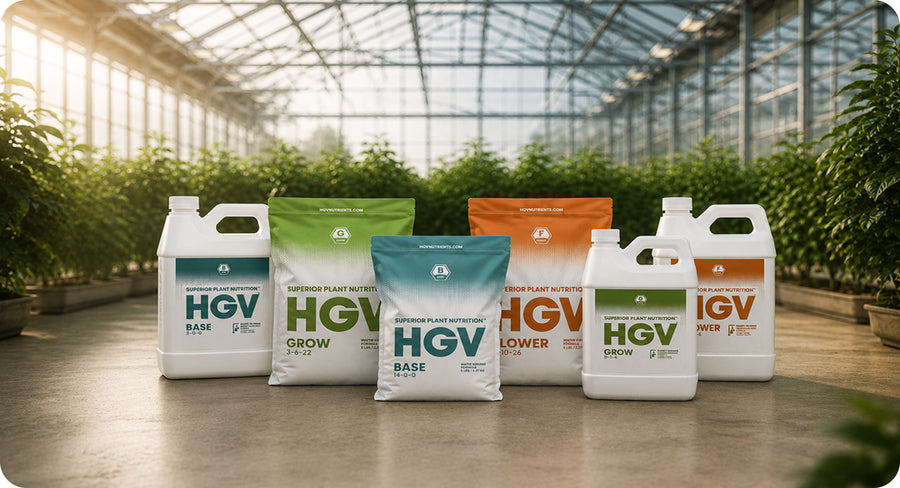
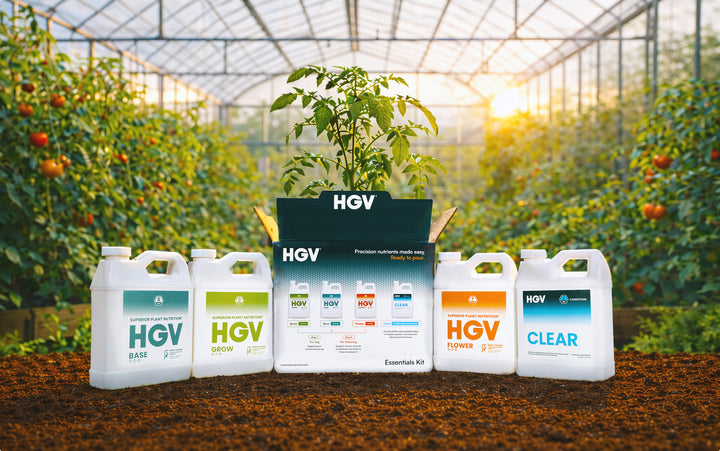
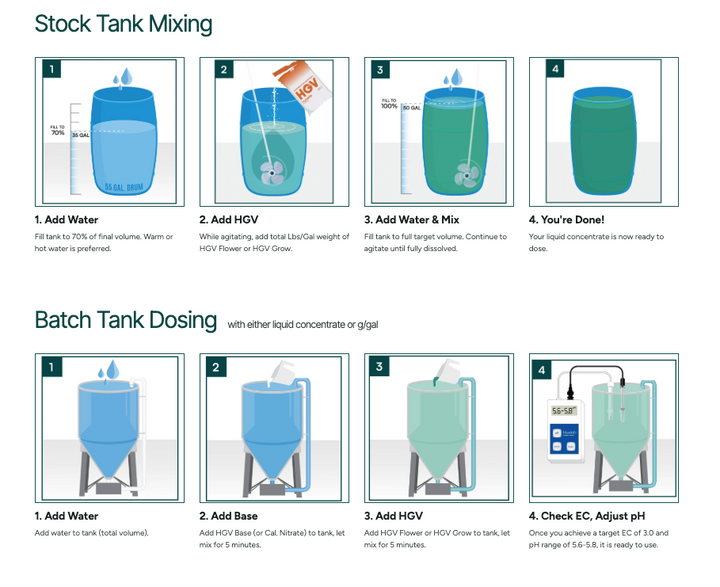
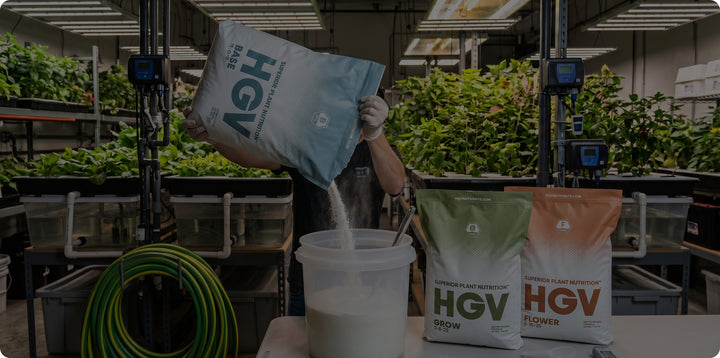
Because the calcium is built into the program. HGV Base is a dedicated calcium and nitrogen part that runs from clone to harvest, and Grow and Flower carry the magnesium, sulfur and micronutrients. Proper feeding with HGV prevents calcium and magnesium deficiencies with RO, well or municipal water, so there is no gap for a supplement to fill.
The same thinking applies to other additives. Unless a product measurably improves yield, potency or terpene production in a side-by-side test, the extra cost may not be justified.
How do you confirm a deficiency before adding anything?
- Calibrate your meter and check pH and EC at the point of delivery.
- Compare runoff EC to input EC to look for salt buildup.
- Look at where the symptom is. New growth points to immobile nutrients such as calcium. Older leaves point to mobile nutrients such as magnesium.
- If the numbers look right and the symptom persists, get a tissue and water analysis.
The nutrient deficiency guide walks through the full symptom chart.
Frequently asked questions
Do I need cal-mag with RO water?
Only if your base nutrients were formulated for tap water. HGV supplies enough calcium and magnesium on its own, so RO users do not need to add cal-mag.
Do I need cal-mag in coco?
Not with buffered coco and a complete nutrient program. Unbuffered or poorly washed coco can pull calcium and magnesium from the feed early on, which is a reason to buy quality buffered coco.
Do LED lights make plants need more cal-mag?
Not directly. Rooms under LED often run with different leaf temperatures and humidity than HPS rooms, which changes transpiration and calcium movement. The fix is usually environmental, not an extra bottle.
Can you use too much cal-mag?
Yes. Overuse raises EC, adds nitrogen late in flower, and can crowd out potassium uptake.
What does magnesium deficiency look like?
Yellowing between the veins on older, lower leaves while the veins stay green. Because magnesium is mobile, the plant moves it from old leaves to new growth, so the bottom of the plant shows it first.