

Feeding in Coco Coir: Nutrients, EC and Runoff
Coco is hydroponics in a bag. Which nutrients to run, the EC and pH to hold, how often to irrigate and how much runoff to take.
Coco coir is an inert, soilless growing medium, so the plant gets all of its nutrition from the feed. Use a complete hydroponic nutrient at every irrigation, keep pH in the high 5s, and water to runoff so salts do not build up. Coco that is fed this way behaves like a forgiving hydroponic system.
Why is coco fed differently than soil?
Soil carries a nutrient reserve and a population of microbes that release it over time. Coco carries almost nothing. It holds water and air in a ratio roots love, but it does not feed the plant. That makes coco a hydroponic medium in practice: every irrigation is a feed, and the nutrient solution has to be complete.
Coco also has a chemical quirk. Its fibers naturally hold potassium and sodium and will swap them for calcium and magnesium from your nutrient solution. Reputable coco is washed and buffered at the factory so this exchange is finished before the bag reaches you. Unbuffered coco is the main reason coco has a reputation for calcium and magnesium problems.
What nutrients work in coco?
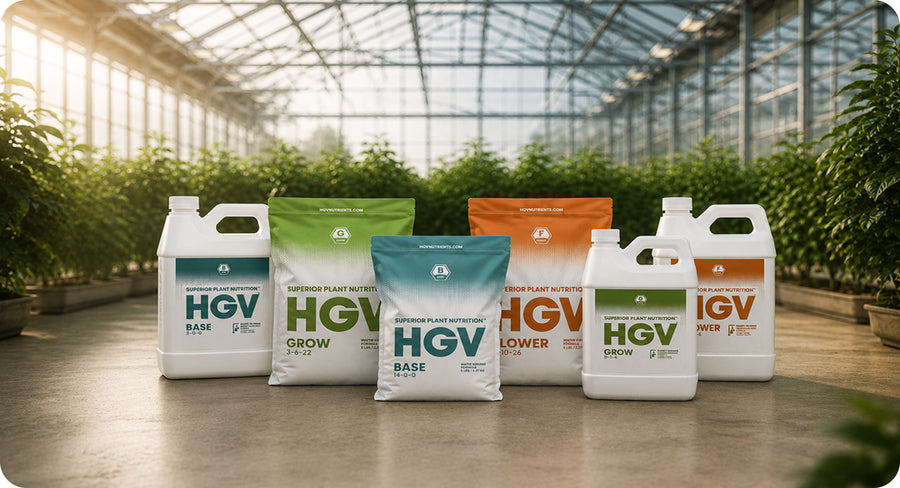
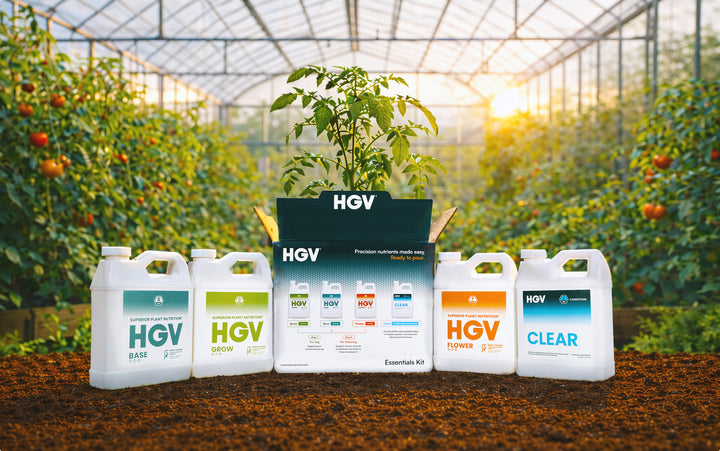
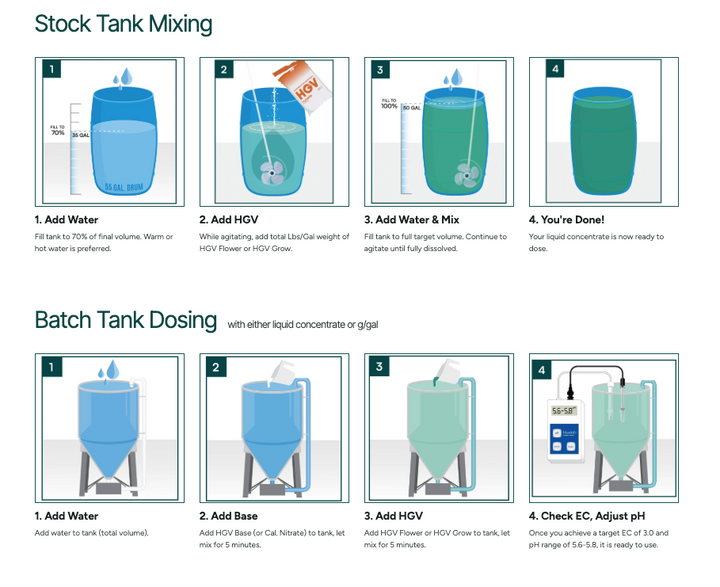
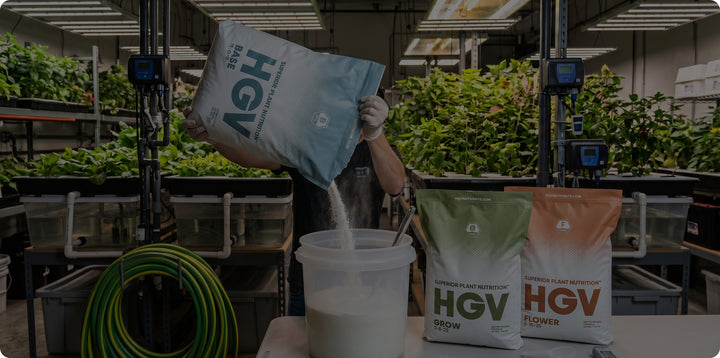
Any complete, fully soluble hydroponic program. You do not need a product with "coco" in the name. HGV has been tested and proven effective in coco coir, stone wool, peat-based mixes and liquid hydroponic systems, using the same two-part program in each: Base with Grow in veg, and Base with Flower in bloom.
What EC and pH should you run in coco?
| Setting | HGV target | Notes |
|---|---|---|
| pH | 5.6 to 5.8 | Measured after mixing and verified at the point of delivery |
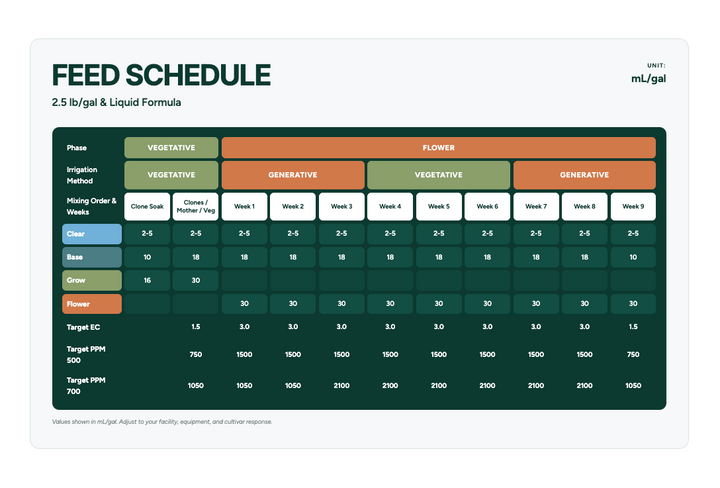
| EC in flower | 3.0 | A generally safe starting point. Adjust for pot size, environment and genetics |
| EC for clones and early veg | 1.5 | Lighter feed while roots establish |
Week-by-week numbers are on the feed schedule.
How often should you water coco?
More often than soil, and never with plain water. Coco holds plenty of air even when wet, so frequent small irrigations keep the root zone stable without drowning it. Established plants in flower are commonly fed several times a day. Letting coco dry out concentrates the salts around the roots and causes swings in EC.
Feed at full strength every time. Alternating feed with plain water disturbs the balance of nutrients held on the coco fibers and tends to create the calcium and magnesium symptoms growers are trying to avoid.
How much runoff do you need?
Enough to carry excess salts out of the pot. Many growers aim for roughly 10 to 20 percent of the irrigation volume as runoff over the course of a day. Runoff is also your best diagnostic tool:
- Runoff EC close to input EC: the root zone is in balance.
- Runoff EC climbing well above input: salts are accumulating. Increase runoff volume or frequency.
- Runoff EC well below input: the plants are taking up more than they are given. Consider a stronger feed.
Do you need cal-mag in coco?
Not with buffered coco and a complete nutrient. HGV supplies sufficient calcium and magnesium for all growth phases with RO, well or municipal water. If you see calcium or magnesium symptoms in coco, check pH and runoff EC before reaching for a supplement. The reasoning is laid out in do you need cal-mag.
Biostimulants such as kelp and humic acids are not necessary in coco or rockwool either.
What are the common mistakes in coco?
- Treating coco like soil and letting it dry between waterings.
- Watering with plain water between feeds.
- Taking no runoff, then fighting salt buildup in mid flower.
- Buying cheap, unbuffered coco and compensating with supplements.
- Adjusting pH before the nutrients are fully mixed.
Frequently asked questions
Is coco coir hydroponics?
Functionally, yes. Coco is a soilless medium with no meaningful nutrient content, so plants depend entirely on the nutrient solution, the same as in rockwool or water culture.
Can you use hydroponic nutrients in coco?
Yes. Coco should be fed with a complete hydroponic nutrient. Soil fertilizers that depend on microbes or slow release are a poor fit.
What pH is best for coco?
HGV's target is 5.6 to 5.8, measured after all nutrients are dissolved. Staying in the high 5s keeps the full range of nutrients available.
Should you flush coco?
Routine runoff does the job that flushing is meant to do. If runoff EC has climbed far above input, irrigate with extra volume at your normal feed strength until runoff comes back in line.
Can coco be reused?
It can, but old root mass and accumulated salts make reused coco less predictable. If you reuse it, expect to manage runoff EC more closely.