



Nutrient Deficiencies: How to Read the Leaves
A symptom chart organized by where the problem shows up, plus the five checks to run before you add anything to the tank.
To diagnose a nutrient deficiency, look at where on the plant the symptom appears first. Mobile nutrients such as nitrogen, phosphorus, potassium and magnesium show up on older, lower leaves. Immobile nutrients such as calcium, sulfur, iron and the other micronutrients show up on new growth. Then check pH and EC before you add anything, because most deficiencies are uptake problems, not shortages.
Why does the location of the symptom matter?
When a plant runs short of a mobile nutrient, it pulls that nutrient out of old leaves and sends it to new growth. The old leaves yellow first. Immobile nutrients cannot be moved once they are built into tissue, so when supply drops, the newest leaves are the ones that suffer. This one distinction cuts the list of suspects in half.
Nutrient deficiency chart
| Nutrient | Mobility | Shows first on | What it looks like |
|---|---|---|---|
| Nitrogen (N) | Mobile | Older, lower leaves | Uniform pale green to yellow, starting at the bottom and moving up. Slow growth |
| Phosphorus (P) | Mobile | Older leaves | Dark, dull leaves, sometimes with purple or bronze tones. Stunting. More common in cold root zones |
| Potassium (K) | Mobile | Older leaves | Yellow then brown, scorched-looking leaf edges and tips |
| Magnesium (Mg) | Mobile | Older leaves | Yellowing between the veins while the veins stay green |
| Calcium (Ca) | Immobile | New growth | Distorted or hooked young leaves, brown spots, weak stems, dying tips |
| Sulfur (S) | Low mobility | New growth | Uniform pale yellow on young leaves. Easily mistaken for nitrogen, but at the top of the plant |
| Iron (Fe) | Immobile | New growth | Bright yellow new leaves with green veins. Often caused by high pH |
| Manganese, zinc, boron | Immobile | New growth | Mottled yellowing, small or twisted leaves, short spacing between nodes |
What should you check before adding nutrients?
Work through these in order. Each one is more likely than a true shortage in a room that is fed a complete program.
- The meter. Calibrate your pH and EC probes. A drifting probe creates problems that are not there.
- pH at the point of delivery. HGV mixes to 5.6 to 5.8. Below about 5.5, calcium, magnesium and potassium uptake drops. Above about 6.5, iron, manganese, zinc and boron become less available. The reservoir pH guide covers this in depth.
- Input EC and runoff EC. Runoff far above input means salt buildup, which blocks uptake. Runoff far below input means the plants want more.
- The root zone. Overwatering, cold roots and poor drainage mimic several deficiencies at once.
- The environment. Very high humidity slows transpiration and calcium movement. Cold nights bring out purple color and slow phosphorus uptake.
What looks like a deficiency but is not?
- "Nitrogen toxicity." Dark, clawed leaves are often blamed on too much nitrogen. More often the cause is a calcium deficiency, a potassium excess or overwatering.
- Purple leaves and stems. Usually genetics. Anthocyanins give some cultivars their purple color. A phosphorus deficiency can also cause purpling, typically alongside cold temperatures and other symptoms.
- Yellow lower leaves late in flower. Some fade is normal as a plant matures and moves nutrients out of old leaves.
- Nutrient lockout. The nutrient is in the tank but pH or salt buildup is keeping the plant from taking it up. Adding more makes it worse.
How do you fix a real deficiency?
Correct the cause, then give it time. Bring pH back into range, clear salt buildup with additional runoff at your normal feed strength, and confirm that you are mixing at the published rates. Damaged leaves will not recover. Judge the fix by the new growth that comes in over the following week.
If the numbers check out and symptoms continue, stop guessing. A tissue analysis shows exactly what is in the leaf, and a water analysis shows what you are starting with. HGV's plant testing service pairs both with a consultation to turn the results into a plan.
How do you prevent deficiencies?
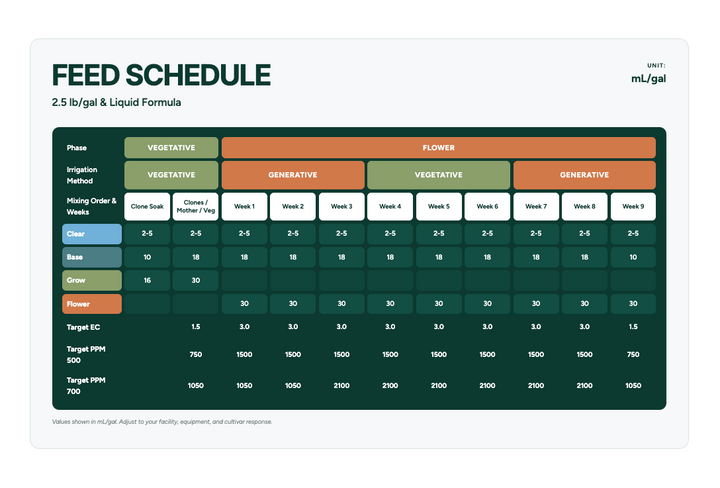
- Run a complete program at the published rates. HGV supplies all macro and micronutrients across Base, Grow and Flower, so no cal-mag or micronutrient supplement is required.
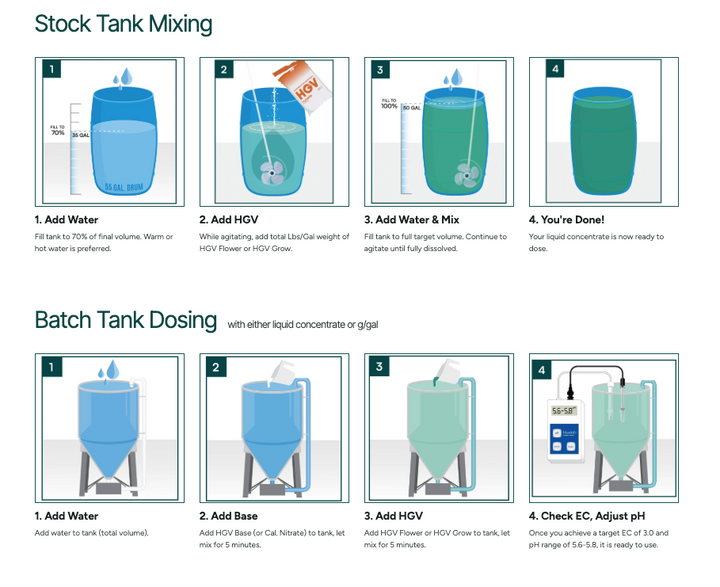
- Verify EC and pH at every batch, at the point of delivery.
- Keep irrigation lines and reservoirs clean.
- Know your source water. One analysis up front prevents months of chasing symptoms.
Frequently asked questions
What does nitrogen deficiency look like?
The oldest, lowest leaves turn evenly pale green and then yellow, and the yellowing moves up the plant. Growth slows. Because nitrogen is mobile, the plant sacrifices old leaves to feed new ones.
What is the most common nutrient deficiency in cannabis?
Apparent calcium and magnesium deficiencies are reported most often, but in rooms fed a complete nutrient program the underlying cause is usually pH, salt buildup or root-zone conditions and not a lack of nutrients in the feed.
How can you tell nutrient burn from a deficiency?
Nutrient burn starts as brown, crisp leaf tips across the plant and comes with high runoff EC. A deficiency follows a pattern tied to old or new growth. Check runoff EC to tell them apart.
Can pH cause nutrient deficiencies?
Yes. pH controls which nutrients are available for uptake. A feed with every nutrient present will still produce deficiency symptoms if pH is out of range.
Will damaged leaves recover after I fix the problem?
Usually not. Watch the new growth. Healthy new leaves within about a week tell you the correction worked.