
Best Dry Nutrients for Cannabis: HGV, Athena Pro, Jack's 3-2-1 and Front Row Ag Compared
The four dry salt programs commercial growers actually use, compared by label analysis, parts and cost per gallon.
The four dry nutrient programs most used in commercial cannabis are HGV, Athena Pro Line, Front Row Ag and Jack's 3-2-1. All four are complete mineral salt systems that cost far less per gallon than bottled liquids. They differ in how many products you measure, whether there is a dedicated bloom formula, and how much control you have over ratios. HGV and Athena Pro run two products at a time. Front Row Ag and Jack's run three.
A note on bias: HGV is our line. The analyses below come straight from each manufacturer's published labels so you can check them yourself.
Dry nutrient lines compared
| Line | Calcium and nitrogen part | Veg part | Flower part | Products in use at once |
|---|---|---|---|---|
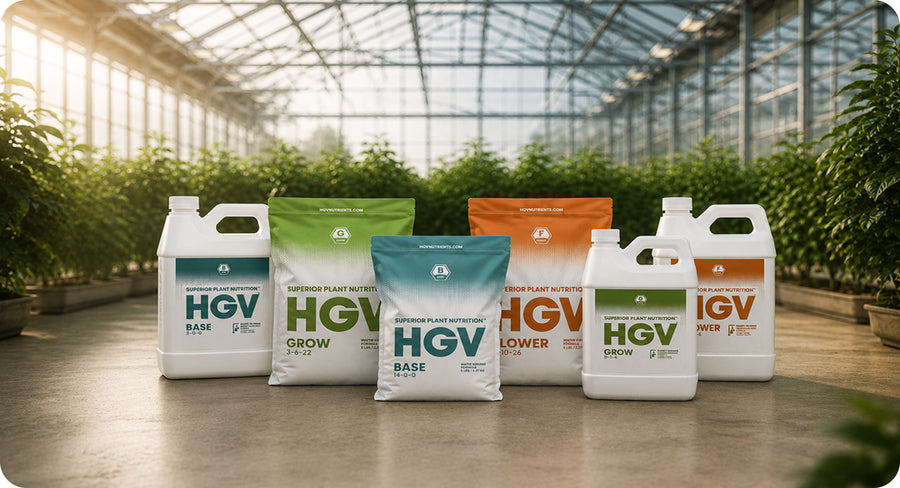
| HGV | Base 14-0-0 | Grow 3-6-22 | Flower 0-10-26 | 2 |
| Athena Pro Line | Pro Core 14-0-0 | Pro Grow 2-8-20 | Pro Bloom 0-12-24 | 2 |
| Front Row Ag | Part A 14-0-8 | Part B 2-13-17 and Bloom 0-35-29, used together in changing proportions | 3 | |
| Jack's 3-2-1 | Calcium nitrate 15.5-0-0 | Part A 5-12-26 plus Epsom salt, one recipe for the whole cycle | 3 | |
Analyses are from manufacturer labels as of November 2026. NPK is only part of the picture. Calcium, magnesium, sulfur and micronutrient levels differ too, so compare full guaranteed analyses before deciding. If the numbers are unfamiliar, start with NPK explained.
How do the four programs differ?
HGV
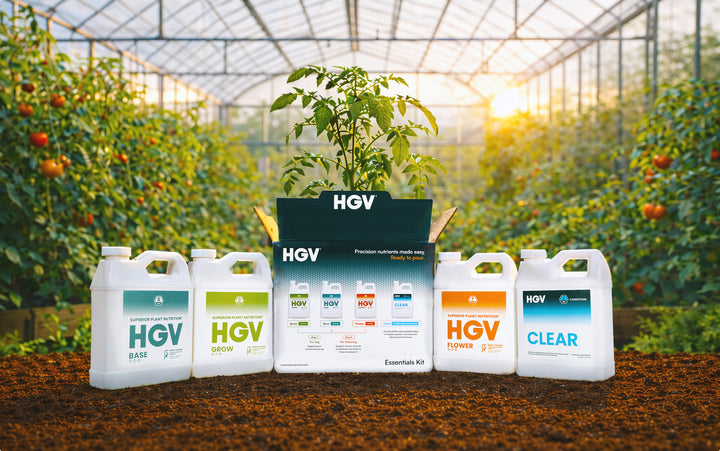
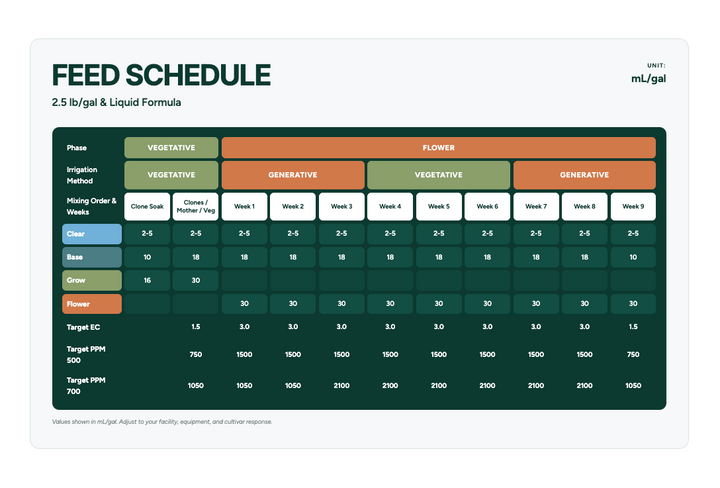
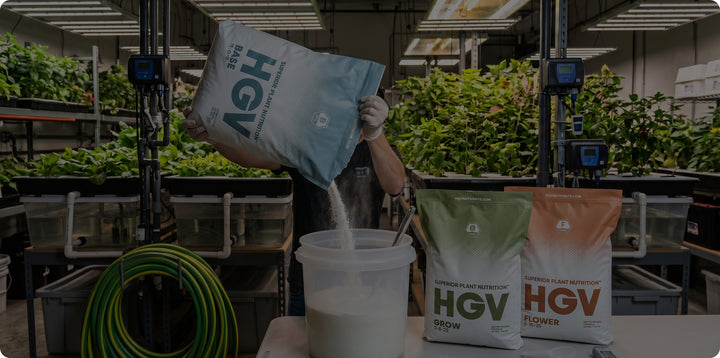
Two products at a time: Base with Grow in veg, Base with Flower in bloom. At the transition you swap one bag and keep the same rates. HGV publishes grams and milliliters per gallon for every EC step. At EC 3.0 the rate is 4.2 g of Base and 7.0 g of Grow or Flower per gallon. The program is designed to run without cal-mag, every batch is blended in-house and tested, and the same formula is sold as a ready-made liquid for growers who do not want to make concentrates.
Athena Pro Line
Also two products at a time, with a 14-0-0 calcium and nitrogen part and separate grow and bloom parts. The structure is similar to HGV. The analyses of the grow and bloom parts are different, and so are the usage rates, so each program has to be run on its own feed chart.
Front Row Ag
Three products used together through the cycle. Because Part B and Bloom are separate, the grower can change the balance of phosphorus and potassium at different stages. That flexibility is the reason to choose it. The trade-off is a third stock tank or injector channel and more to manage.
Jack's 3-2-1
Three inputs in a fixed ratio, with the same recipe from veg through flower. It is simple and inexpensive, and it has a long track record. It has no stage-specific bloom formula, and the Epsom salt is purchased separately.
Which one should you choose?
- You want the simplest SOP: a two-product program. Two measurements, two tanks, one swap at flower.
- You want to adjust ratios by stage: Front Row Ag's three-part structure is built for it.
- You want the lowest input cost and do not need a bloom formula: Jack's 3-2-1.
- You want dry and liquid versions of the same formula: HGV, where the liquid matches a 2.5 lb per gallon dry concentrate.
How do you compare cost fairly?
Price per bag is misleading because every line is dosed at a different rate. Compare cost per gallon of finished feed instead:
- Find the grams per gallon each product needs at your target EC, from the manufacturer's chart.
- Divide the grams in the bag by that rate to get gallons of feed per bag. A 25 lb bag holds 11,340 g.
- Divide the bag price by the gallons. Add up every product in the program, including required supplements.
Example with HGV at EC 3.0: a 25 lb bag of Grow or Flower makes about 1,620 gallons of feed, and a 25 lb bag of Base makes about 2,700 gallons.
What the label does not tell you
- Batch consistency. Ask whether each batch is tested against spec before it ships.
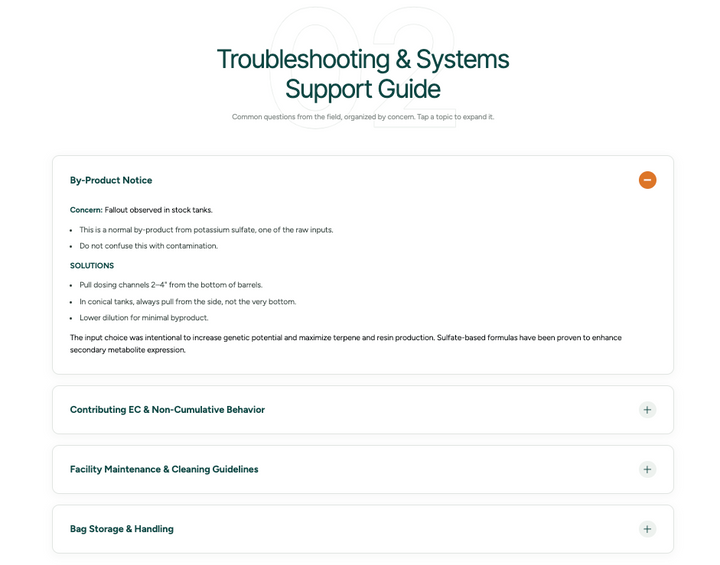
- Solubility. Residue in a stock tank ends up in emitters.
- Support. Water analysis, tissue testing and a rep who will work through your room are worth more than a small difference in price. HGV offers plant and water testing with a consultation.
- What else the chart requires. A base program that needs several additives is a bigger program than it looks.
Frequently asked questions
Is HGV similar to Athena Pro?
The structure is similar: both pair a 14-0-0 calcium and nitrogen part with a separate grow or bloom part. The formulas are not the same. HGV Grow is 3-6-22 and Flower is 0-10-26, while Athena Pro Grow is 2-8-20 and Pro Bloom is 0-12-24. Usage rates differ too, so follow each manufacturer's chart.
Can I switch dry nutrient lines in the middle of a run?
Yes. Mix the new program to the same EC you are running now and continue. Watch the plants and your runoff for the first week.
What is Jack's 3-2-1?
A dry fertilizer recipe from JR Peters that combines Part A (5-12-26), calcium nitrate and Epsom salt in roughly a 3 to 2 to 1 ratio by weight.
Are dry nutrients harder to use than liquids?
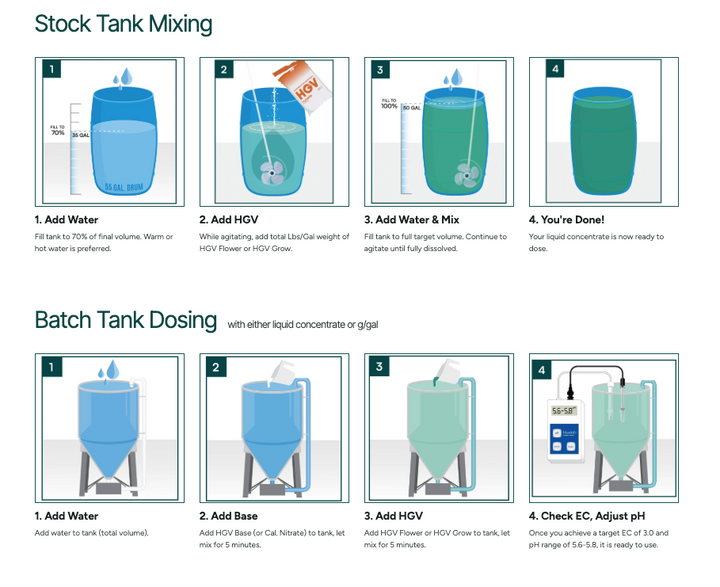
They need one extra step, dissolving into a concentrate. After that they are dosed exactly like a liquid. See how to mix a hydroponic nutrient solution.
Do dry nutrients need cal-mag?
It depends on the line and your water. HGV supplies sufficient calcium and magnesium for all growth phases with RO, well or municipal water, so none is needed. Check the feed chart for any other program.