


Two-Part vs Three-Part Nutrients: Which System Is Right for You?
How the two approaches differ in mixing steps, flexibility and room for error, and which one holds up better at commercial scale.
Two-part and three-part nutrients both deliver complete plant nutrition. The difference is how the elements are divided between containers. A two-part system keeps calcium and nitrogen in one part and puts everything else in a second part that you swap between veg and flower. A three-part system splits the recipe across three products that are blended in different ratios as the plant grows. Two-part is simpler to mix and scale. Three-part offers more ratio control at the cost of more measuring.
Why are nutrients split into parts at all?
Chemistry. Concentrated calcium reacts with concentrated phosphates and sulfates and forms an insoluble solid. Keeping calcium in its own container prevents that. Every complete hydroponic program has at least two parts for this reason. A product sold as a true "one-part" is either very dilute or leaves something out.
How does a two-part system work?
One part supplies calcium and nitrogen for the whole cycle. The second part supplies phosphorus, potassium, sulfur, magnesium and micronutrients, and comes in a veg version and a flower version. You always run two products at a time.
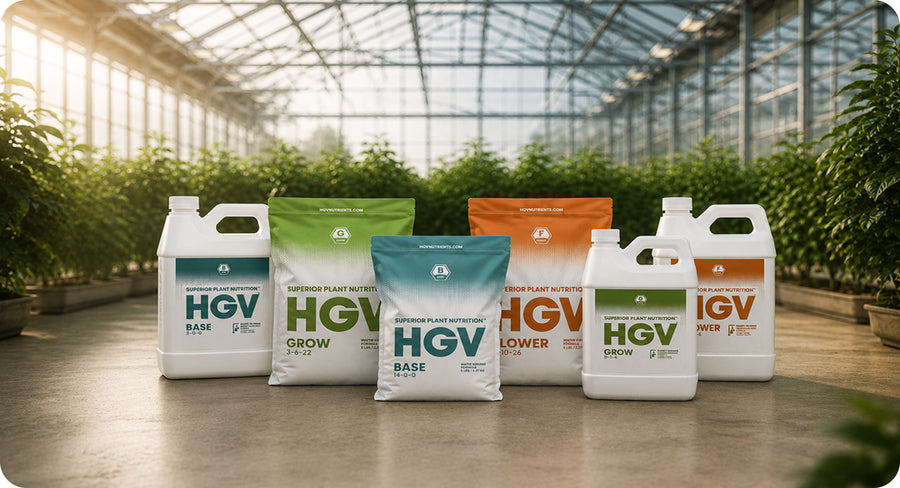
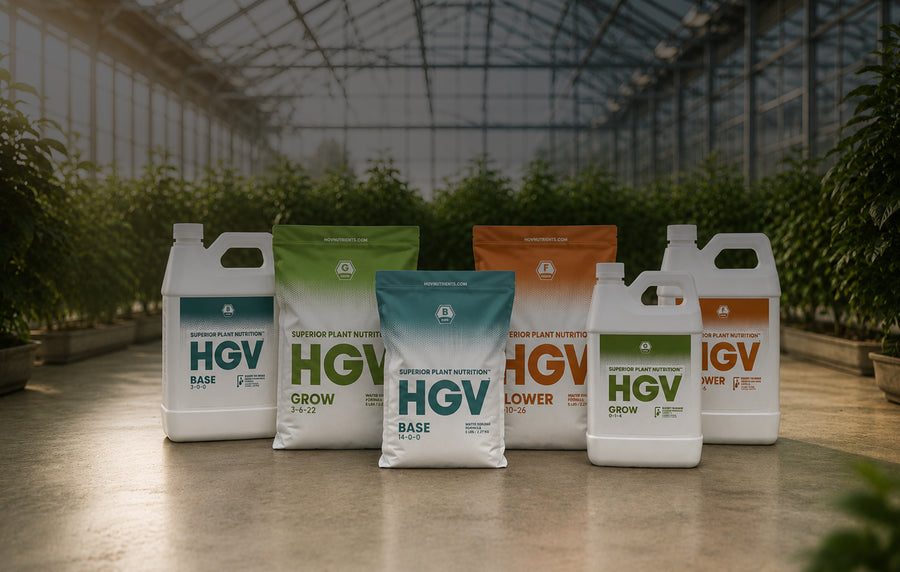
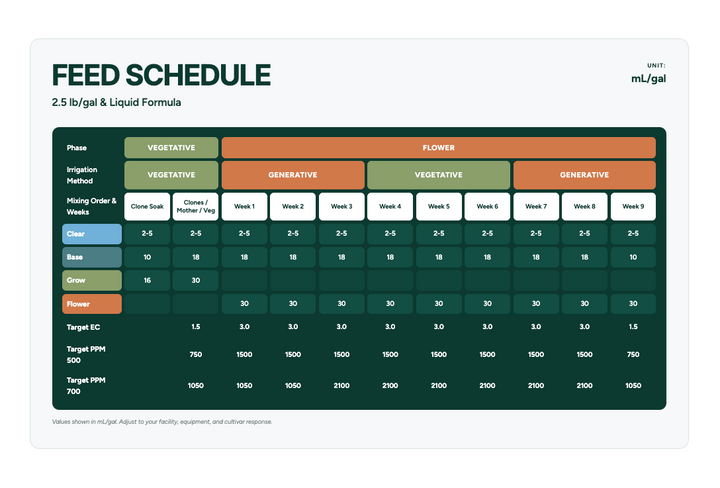
HGV is built this way. Base (14-0-0) runs from clone to harvest. It is paired with Grow (3-6-22) in veg and Flower (0-10-26) in bloom. At the switch to flower, one product changes and the rates stay the same.
How does a three-part system work?
The classic three-part liquid uses a grow component, a bloom component and a micro component that carries the calcium. All three are used through the whole cycle, and the grower changes the ratio between them from week to week. Dry three-part recipes follow a similar idea, typically a complete blend plus separate calcium nitrate and magnesium sulfate.
The appeal is control: you can tune the ratio for a specific crop or stage. The cost is complexity. There are three measurements per batch, three stock tanks or injector channels at scale, and a feed chart with ratios that change weekly.
How do they compare?
| Two-part | Three-part | |
|---|---|---|
| Products in use at once | 2 | 3 |
| Measurements per batch | 2 | 3 |
| Veg to flower transition | Swap one product | Change the ratio of all three |
| Stock tanks or injector channels | 2 | 3 |
| Ratio flexibility | Set by the manufacturer for each stage | Adjustable by the grower |
| Room for mixing error | Lower | Higher |
Which is better for commercial growing?
At scale, every extra product is another tank, another injector, another line on the SOP and another chance for a batch to go wrong. A two-part program dosed from two concentrates is easier to train on, easier to audit and easier to keep consistent from room to room. That consistency is what most commercial operations are really buying.
Three-part systems make sense for growers who run many different crops from one nutrient line or who want to experiment with ratios themselves.
Do you need additives on top?
Count the whole feed chart, not just the base. A two-part line that also requires cal-mag, a silica product, a bloom booster and a finisher is a six-part line in practice. HGV supplies enough calcium and magnesium that cal-mag is not needed, and recommends testing any additive side by side before paying for it across a whole facility.
What should you compare when choosing?
- Cost per gallon of finished feed at your target EC, with every required product included.
- Total number of products on the feed chart.
- Dry or liquid. Dry concentrates cost less per gallon. See dry vs liquid nutrients.
- Batch consistency. Is every batch tested against spec?
- Published rates you can verify with an EC meter.
For the dry lines side by side, see the best dry nutrients compared.
Frequently asked questions
Are two-part nutrients as complete as three-part?
Yes. Completeness depends on the formula, not the number of containers. A well-designed two-part program supplies every essential element.
Can you mix the two parts together before adding water?
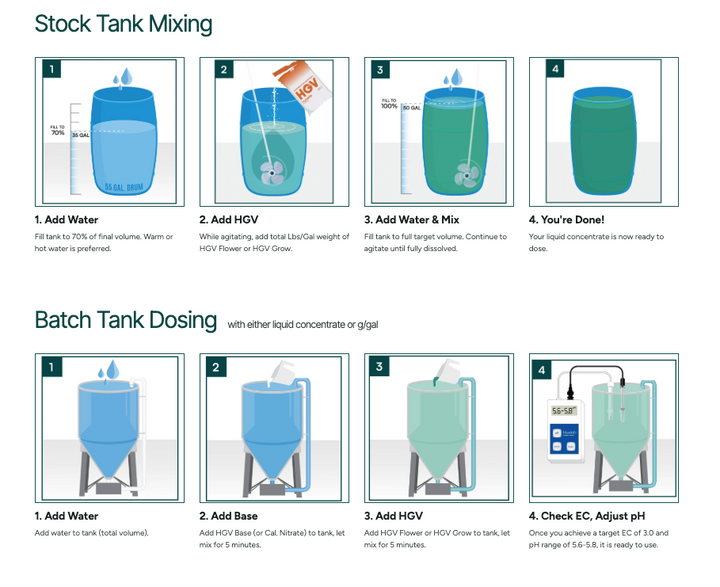
No. Concentrated calcium will react with the phosphates and sulfates in the other part. Add each part to the water separately and let the first dissolve before adding the second.
Why do some two-part lines have three products?
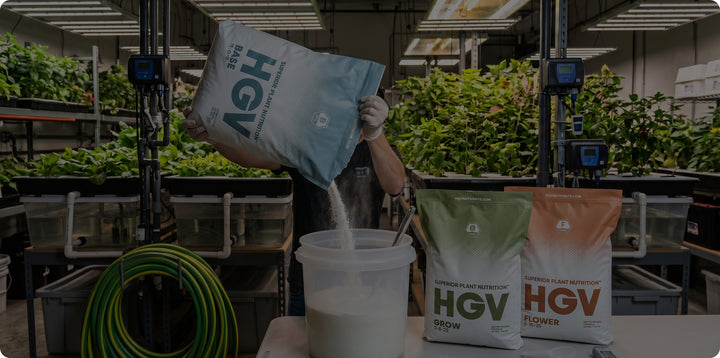
Because the second part comes in a veg version and a flower version. You own three products but only ever run two at a time. HGV's Base, Grow and Flower work this way.
Is a two-part nutrient good for beginners?
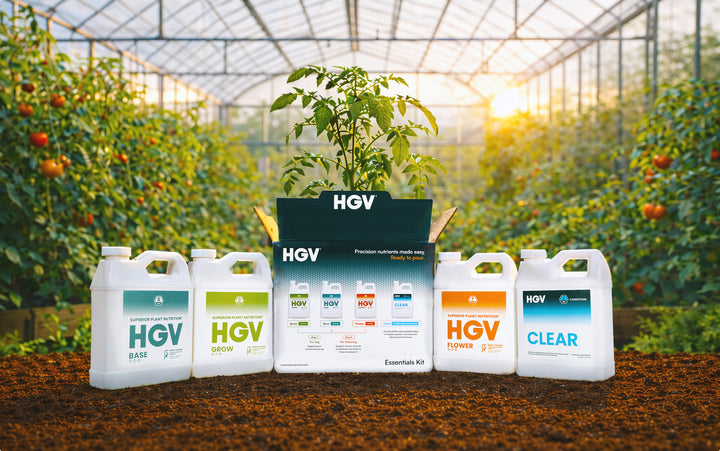
Yes. Two measurements, a fixed pairing for each stage and a single target EC make it hard to get wrong. The HGV Essentials Kit is a simple way to start.
Can I switch from a three-part line in the middle of a run?
Yes. Match your current EC with the new program and continue. Watch the plants and your runoff for the first week.